

eFootball v6.0.0 changed how a player's Playing Style should be read. Instead of treating one label as the player's identity in every phase, KONAMI split the system into Attacking Playing Styles and Defensive Playing Styles. A player can now be assigned an attacking style, a defensive style, or both.
What did KONAMI officially change?
KONAMI's v6.0.0 documentation says many new Playing Styles were added and that some players can now have different Playing Styles for attack and defense. The update notes go further: each player is assigned an Attacking Playing Style, a Defensive Playing Style, or both.
KONAMI also says the new additions placed particular emphasis on Defensive Playing Styles. The goal is broader squad-building options, including clearer defensive identities for midfielders and forwards whose off-ball defensive role was previously less expressive.
What is an Attacking Playing Style?
It is the phase-specific role associated with the player when the team attacks. KONAMI's official example uses Goal Poacher: a forward that makes runs behind the defensive line. The example shows the concept, but it should not be read as proof that every attacking movement is controlled by this field alone.
What is a Defensive Playing Style?
It is the player's role when the team is defending. In the same example, the player becomes a Front Line Pressure man who presses from the front. A striker can therefore keep a run-behind identity in possession while still having a separate, active job when possession is lost.
Can a player have only one of the two?
Yes. The update notes explicitly say a player can have an Attacking Playing Style, a Defensive Playing Style, or both. Missing one category on a particular card is therefore not automatically an error; it can be part of the card's design.
Does having two Playing Styles automatically make a card better?
KONAMI does not state that a card with both categories is inherently stronger than a card with one. Two roles give you more tactical information, but ratings, Player Skills, position, proficiency, manager setup and overall Game Plan still matter.
Zaplat analysis: the value of a dual-role card depends on whether both roles solve jobs your team actually needs. A slightly weaker attacker who fits your first line of pressure may suit one setup better than a more explosive card that does not match the same defensive idea. The reverse is equally possible in a team that does not rely on aggressive front pressure.
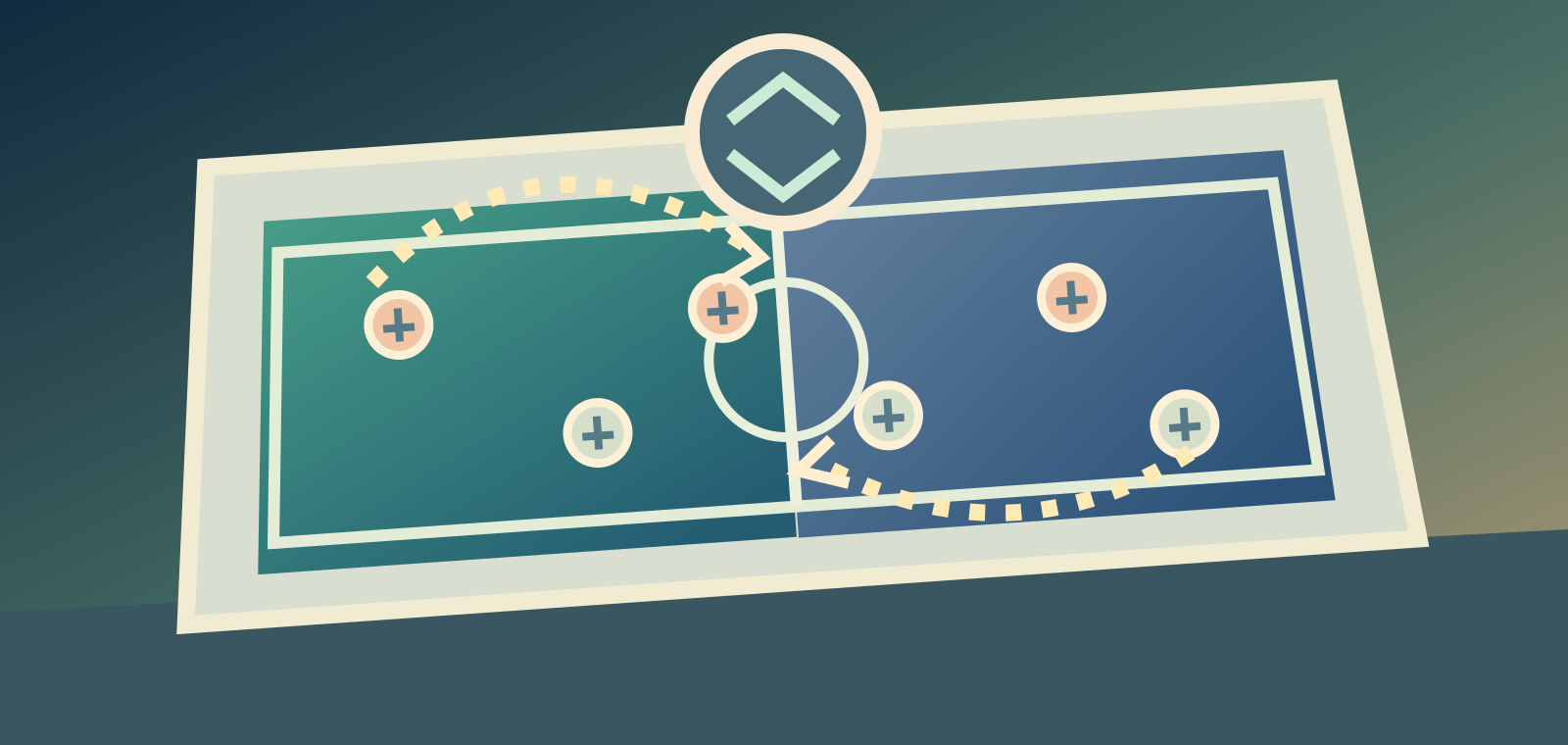
How should you read a player card after v6.0.0?
- Start with position and core stats; Playing Style does not replace them.
- Read the Attacking Playing Style for the player's intended attacking role.
- Read the Defensive Playing Style for the role that can emerge without the ball.
- Judge the combination across both phases rather than ranking each label in isolation.
- Compare the combination with the jobs your formation needs, not just with whichever label is considered fashionable.
The Goal Poacher + Front Line Pressure example
KONAMI uses this pairing to make the system easy to understand. In attack, the player behaves as a Goal Poacher who looks to get in behind. In defense, the identity changes to Front Line Pressure, pressing from the front. One player can therefore express two different tactical jobs across possession states.
The example does not mean every Goal Poacher automatically receives Front Line Pressure, nor does it prove that Front Line Pressure always activates from one exact zone or with one fixed intensity. Read the actual card rather than turning the example into a universal rule.
Why did KONAMI emphasize Defensive Playing Styles?
KONAMI says many new styles were added with a focus on Defensive Playing Styles, allowing midfielders and forwards to show defensive traits that could not previously be expressed as clearly. That changes card evaluation because a forward or midfielder can now be judged for what happens after the ball is lost as well as what happens before the shot.
Does Playing Style increase player stats?
The official material used for this guide does not say that merely having an Attacking or Defensive Playing Style automatically adds numerical points to Pace, Defensive Awareness, Stamina or any other attribute. A style label should therefore not be treated as a hidden stat buff.
Playing Style is not the same as Player Skill
These systems describe different things. Player Skills are technical abilities attached to the player, while Playing Styles describe role behavior. A Defensive Playing Style does not automatically grant Interception, Blocker or any other Player Skill unless that Skill is actually listed on the card.
It is not the same as Team Playstyle either
A Team Playstyle such as Overload describes the team-wide structure. Attacking and Defensive Playing Styles describe individual player roles. The two can interact because individuals operate inside the team shape, but KONAMI does not state that one specific player-style combination is mandatory for one Team Playstyle.
Zaplat analysis: start with the job, not the label
When building Dream Team, ask two questions: what job do I need from this player when I have the ball, and what job do I need immediately after I lose it? That turns Playing Styles into a selection tool instead of a collection of names to memorize.
For example, if your winger is your main progression outlet, the attacking role may be decisive. If your tactic depends on winning the ball high, the defensive role can become the tiebreaker between two otherwise similar cards.
How to compare two cards in the same position
- Compare core stats and Player Skills first.
- Compare the attacking role: does the player attack the spaces your shape creates?
- Compare the defensive role: does the player press, cover or behave in a way that fits your defensive plan?
- Check position and Position Proficiency so you do not blame a movement difference on Playing Style alone.
- Test across several matches; one opponent is not enough to judge phase behavior.
Do Defensive Playing Styles matter for forwards?
That is one of the clearest reasons for the new system. KONAMI specifically notes that attacking midfielders and forwards can now express traits while defending that could not previously show their uniqueness as clearly. It does not turn every forward into a defender; it makes the off-ball role more explicit.

Do Attacking Playing Styles matter for defenders?
The system can assign attacking, defensive or both categories, but you should not assume a specific defender combination without seeing the actual card. If a defender has an attacking role, evaluate the movement it creates together with the coverage you retain behind the ball.
What about Classic No. 10?
In the AI changes for v6.0.0, KONAMI also removed the effect that reduced defensive participation for players with the Classic No. 10 Playing Style. That is a useful reminder that assumptions from older versions may not survive a system update. Read current behavior and notes rather than relying only on memory from a previous season.
Is the system on every platform?
The v6.0.0 change list records the Attacking/Defensive Playing Style split across PlayStation, Xbox, Xbox on PC, Steam, iOS and Android. The core system is therefore not limited to one platform.
A practical way to test a new card
- For the first two matches, watch the player mainly when your team has possession.
- For the next two, focus on the first seconds after possession is lost and on the player's defensive position.
- Do not change formation, manager and multiple instructions at the same time.
- Note whether the phase-specific role helps the space or pressure pattern you want.
- If behavior differs from expectation, check position and team structure before assuming the Playing Style is broken.
Common mistakes after v6.0.0
- Evaluating a card from its Attacking Playing Style only.
- Assuming two styles automatically mean a higher-quality card.
- Mixing up Player Skill, Playing Style and Team Playstyle.
- Inventing a numerical buff or hidden trigger without evidence.
- Applying the Goal Poacher + Front Line Pressure example to every player.
- Copying another player's formation without understanding what your own cards do in both phases.
When does this system matter most for squad selection?
The clearer the transition demands of your Game Plan, the more useful phase-specific roles become. A team that wants to build patiently and then press immediately after losing possession benefits from players whose roles complement both states. In a simpler setup, raw stats, skills and positional fit may still matter more than maximizing every possible style combination.
Is there a best meta combination?
KONAMI does not identify one combination as universally strongest in the official sources. Meta rankings depend on updates, cards, formation and user decisions. Treat the split as a way to understand jobs more accurately, not as a permanent tier list.
What should you do now?
Open your starting XI and pick only three players: one forward, one midfielder and one defender. Read the attacking and defensive style actually listed on each card, then ask whether those two roles support what you want in and out of possession. That small audit often reveals a card that is excellent individually but mismatched to the team's job.
Sources & references3
KONAMI — eFootball v6.0.0 Version Information: KONAMI — New Season Update (v6.0.0) Available (12 Aug 2026): KONAMI — Big eFootball Update Coming in Mid-August (28 Jul 2026)